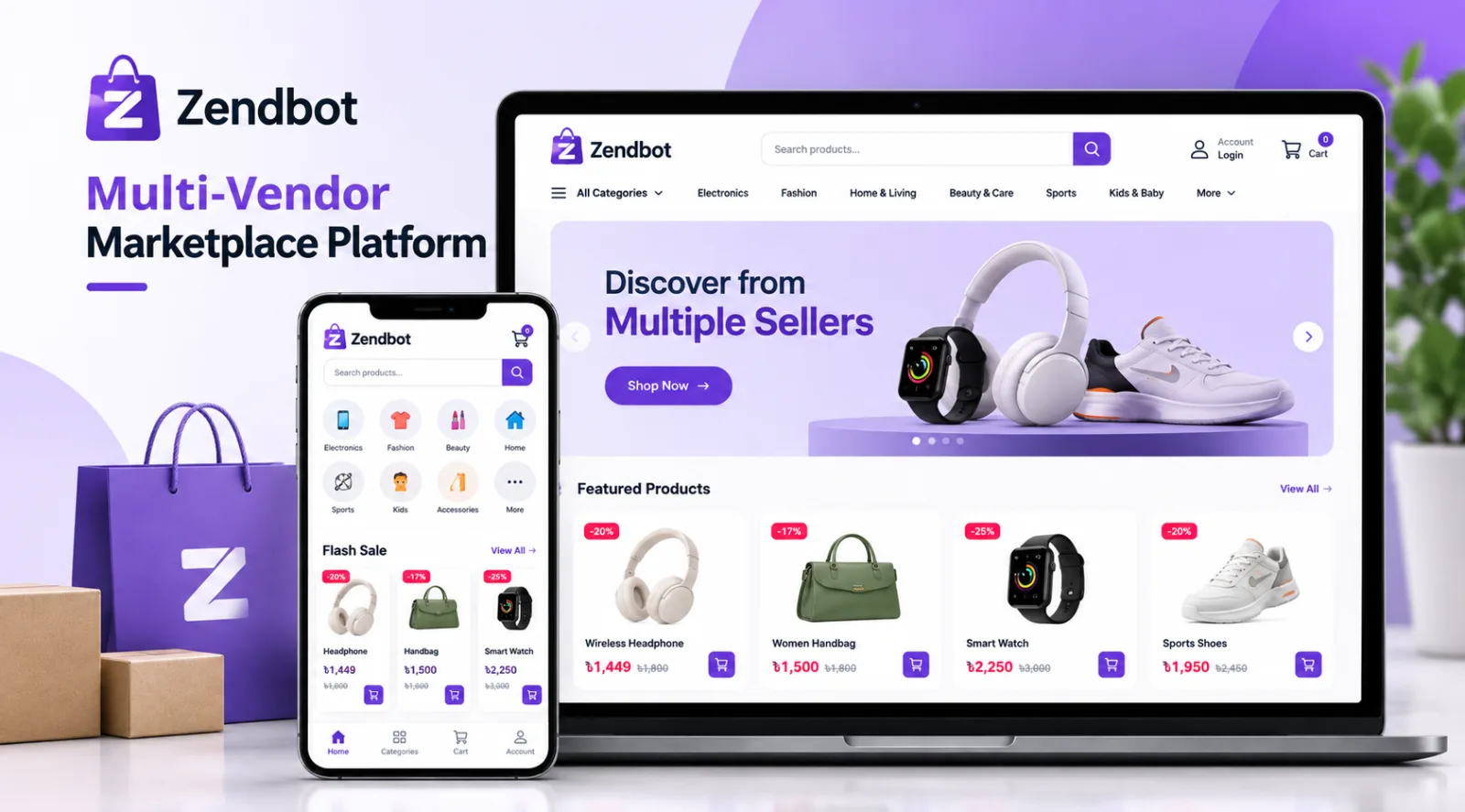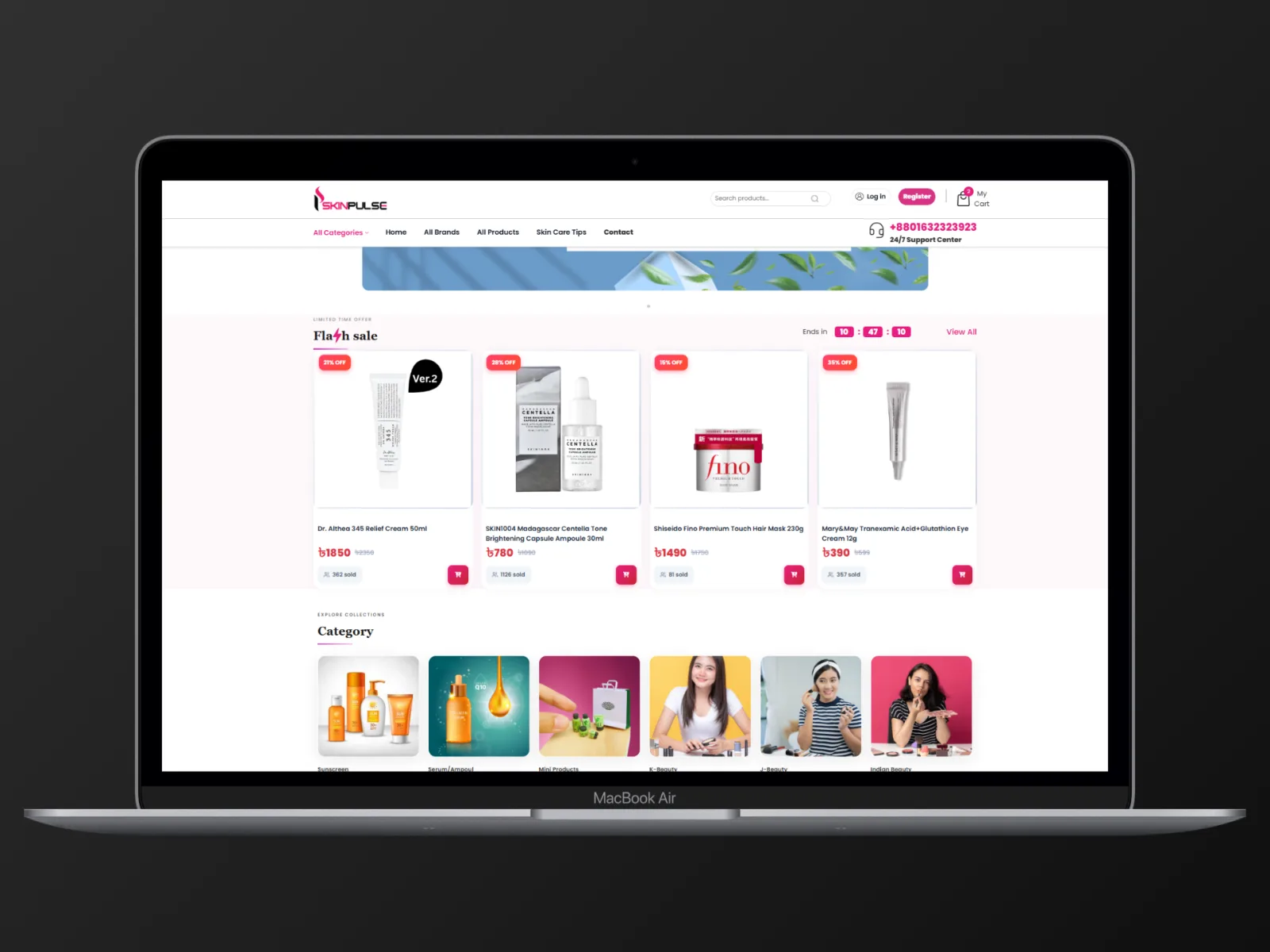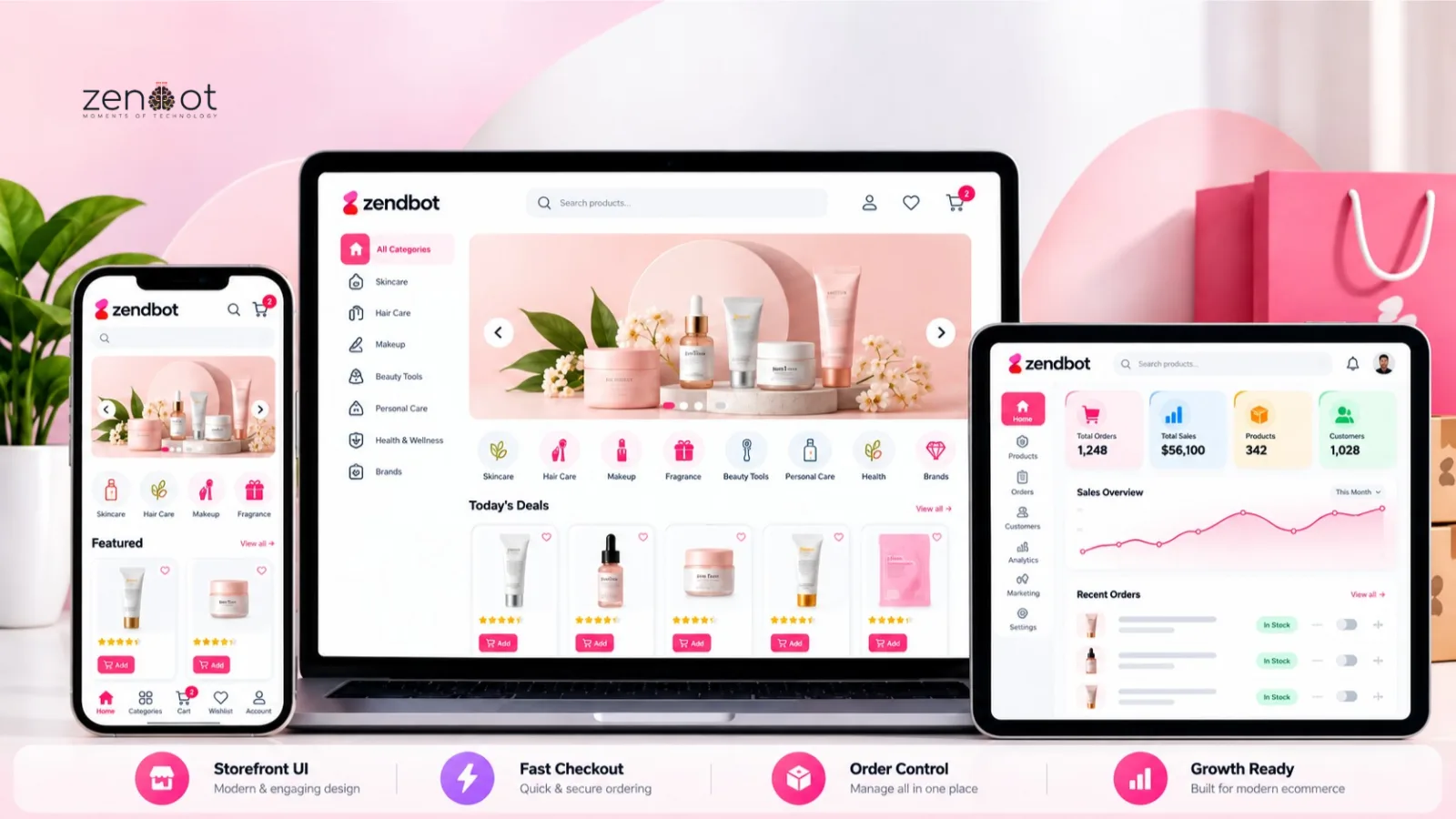
A multi-vendor marketplace is not a normal online store with more products. It is an operating system for other businesses: each vendor owns a catalog, fulfills orders, and expects a payout. The platform earns from commissions, subscriptions, or both.
In Bangladesh the model adds two hard problems: cash on delivery and courier reconciliation. If you cannot attribute a COD remittance to the right vendor and order, payouts become guesswork. This guide covers the minimum design decisions before you buy or build multi vendor marketplace software.
What a marketplace must handle
Treat these as non-negotiable modules, not future features. Each one touches money or trust, so bolting it on later is expensive.
- Vendor onboarding: business documents, bank or bKash details, commission agreement, and a status workflow (pending, approved, suspended).
- Catalog ownership: vendors manage their own products, stock, and pricing within rules you define.
- Order splitting: one cart can produce multiple vendor orders, each with its own fulfillment and courier status.
- Commission ledger: every order line records gross amount, commission, vendor payable, and platform fee before any payout.
- Payouts and holds: a settlement cycle with a clear hold period, especially for COD orders that can be returned.
- Disputes and returns: who pays return shipping, who refunds the buyer, and how the vendor ledger is corrected.
Choose a commission and payout model
Most new marketplaces start with a flat percentage per category. That is simple to explain and simple to audit. Tiered rates and monthly vendor subscriptions work later, once you know which categories drive order volume.
Whatever you choose, store the commission rate on the order line at the time of sale. If you change the rate next month, historical payouts must not change. Do the same for courier fees and platform-funded discounts.
- Fixed percentage: easiest to launch and support.
- Category-based percentage: useful when electronics and fashion have very different margins.
- Subscription plus percentage: works when vendors get storefront branding and lead generation.
- Payout hold: keep COD payables until the return window closes; release prepaid orders faster.
Vendor onboarding checklist
The goal is to approve a vendor in one session without collecting documents over WhatsApp for two weeks. Build the checklist into the application form so nothing is missing at approval time.
- Legal business name, trade license or equivalent, and contact person.
- Payout destination: bank account or mobile wallet, with a verification step.
- Return policy and delivery promise the vendor agrees to follow.
- Product upload rules: image size, variant structure, and prohibited items.
- A named vendor support contact for order and payout questions.
Bangladesh operations checklist
In Bangladesh, marketplace operations fail at the handoff between vendor, courier, and platform support. Decide who owns each step before launch.
- COD reconciliation: match courier remittance to order IDs, then to vendor ledgers, daily.
- Courier split: allow the platform to book pickups centrally, or let vendors book with their own accounts. Central booking gives better tracking but more support load.
- Return ownership: define who receives a returned item, who inspects it, and when the buyer is refunded.
- Support SLA: publish response times for buyers and vendors, and route vendor payout questions to a separate queue.
- Fraud checks: watch repeat COD refusals and new vendors with unusually high order values.
A 90-day launch plan
- Weeks 1-2: choose commission model, payout hold, return policy, and courier workflow.
- Weeks 3-6: configure vendor onboarding, catalog rules, order splitting, and the commission ledger.
- Weeks 7-10: onboard 5-10 pilot vendors and run test orders end to end, including one return and one COD remittance cycle.
- Weeks 11-12: fix reconciliation gaps, publish vendor terms, and open applications.
Related resources
- Zendbot Multi-Vendor Marketplace Platform
- Custom Web Application Development
- Best Ecommerce Platform in Bangladesh for Small Businesses
- WooCommerce vs Custom Ecommerce in Bangladesh
Frequently asked questions
How much does it cost to start a multi-vendor marketplace in Bangladesh?
Cost depends on whether you license an existing platform or build custom. Budget for the platform, hosting, payment integration, courier integration, and a support team for vendor and buyer issues.
Should I handle delivery centrally or let vendors deliver?
Central booking gives consistent tracking and easier COD reconciliation. Vendor-managed delivery is cheaper to start but makes payouts and disputes harder to audit.
When should vendors get paid for COD orders?
After the return window closes and the courier remittance is reconciled. Prepaid orders can be released faster because the money is already collected.
Do I need a commission ledger before launch?
Yes. Without an order-level ledger, payout disputes become manual spreadsheet work and errors compound as vendors and orders grow.
Can a marketplace start with one category?
Yes, and it is usually safer. A focused category makes vendor onboarding, return rules, and courier handling much easier to standardize.
Next step: If you are evaluating marketplace software, start with the payout and reconciliation design, then compare features. Talk to our team with your vendor count and commission model.